Category Archives: Residential Groundworks

How a 3-Man Crew Builds a 40 m² Extension Foundation in One Day
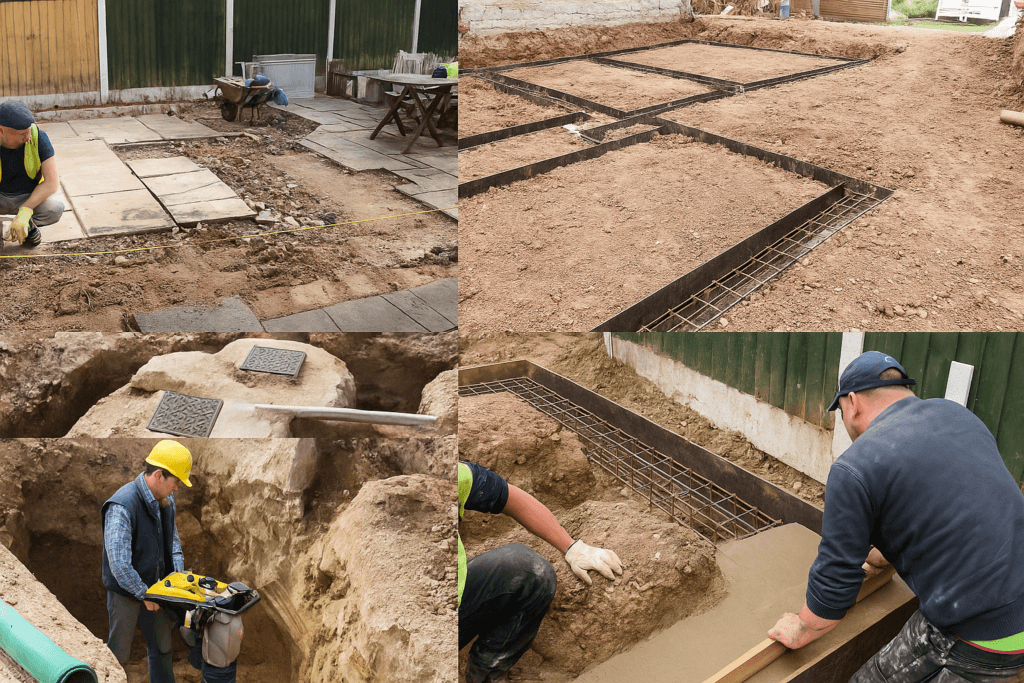
(Rear or side extension under permitted development – foundations, excavation, concrete, steel, drainage connection) Most homeowners believe the groundwork stage of a rear or side extension takes days or even weeks. The reality? With the right sequence, a mini digger, and a 3-man experienced ground crew, the entire 40 m² footprint can be cleared, excavated, […]
Anti-Termite Treatment (When Specified by Client): What It Is, When You Need It, and How We Deliver It

When a client specifies anti-termite treatment, they’re asking for a pre-emptive, engineered barrier against subterranean termites that can silently undermine foundations, boundary walls, and hard landscaping. Below is exactly how we plan, apply, and quality-assure the treatment on UK projects—and what you, as the client or project manager, should expect from a compliant, specialist delivery. […]

Basement Waterproofing — Your Questions, Answered

Below is a practical Q&A you can publish as-is. I’ve tailored it to how we (Amtaar GC) actually design and deliver basements in London. What is basement waterproofing, in plain English? It’s the set of design details and materials that keep water out of your basement. In London you’re dealing with groundwater, rain-laden soils, and […]

Water Supply in External Works: uPVC vs. Steel Pipes — Which Should You Choose?

pdf design building structure

For live projects in London, the external water supply network is only as good as its pipework and testing regime. Below is a practical, contractor-level comparison between uPVC and Steel pipes for mains and service connections, based on method-statement practices we use on site. Quick Summary Where Each Pipe Type Shines When to choose uPVC […]

Stormwater Network Installation: London Method, Testing & Inlets

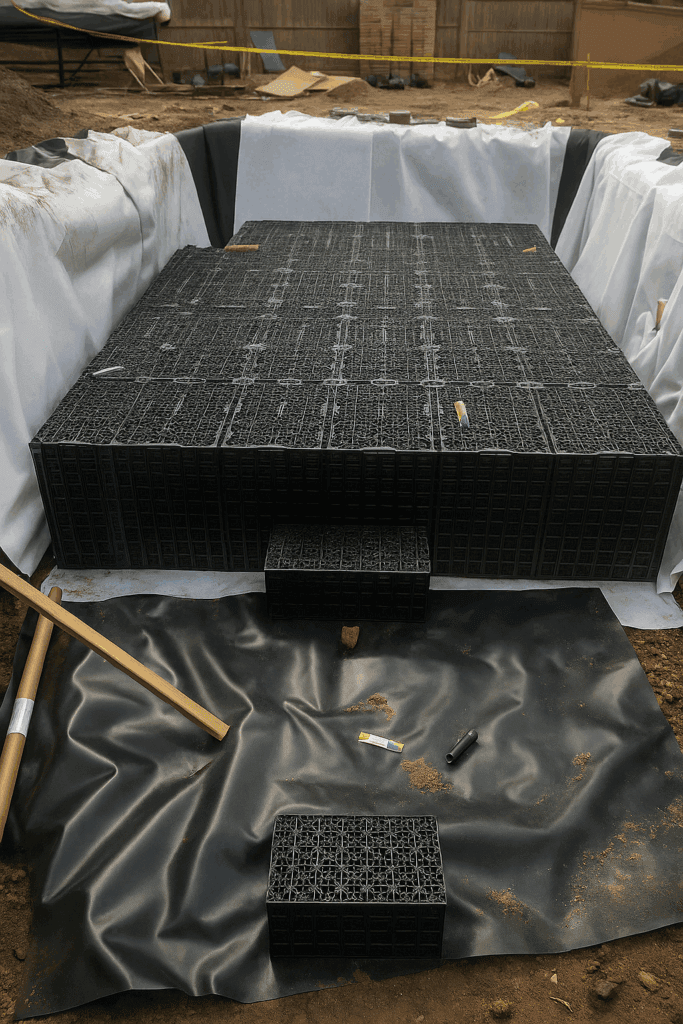
Managing roof and surface runoff is critical on tight London plots. Below is how we install stormwater (surface water) networks—from survey and trenching to inlets, manholes, testing, and reinstatement—so you pass Building Control smoothly and avoid future flooding. What we install (typical scope) Our delivery sequence (field-tested) Why clients pick AmtaarGC

Sewer Network Installation: Step-by-Step Guide for London Sites

When you build or refurbish in London, a well-planned foul sewer network is the difference between a smooth Building Control sign-off and months of disruption. Below is how our team delivers small-to-mid scale sewers for residential blocks, basements and extensions—sequenced for tight urban streets and live services. What we install (typical scope) Our delivery sequence […]

Water Well Construction Method: Step-by-Step Guide for Reliable Groundwater Supply

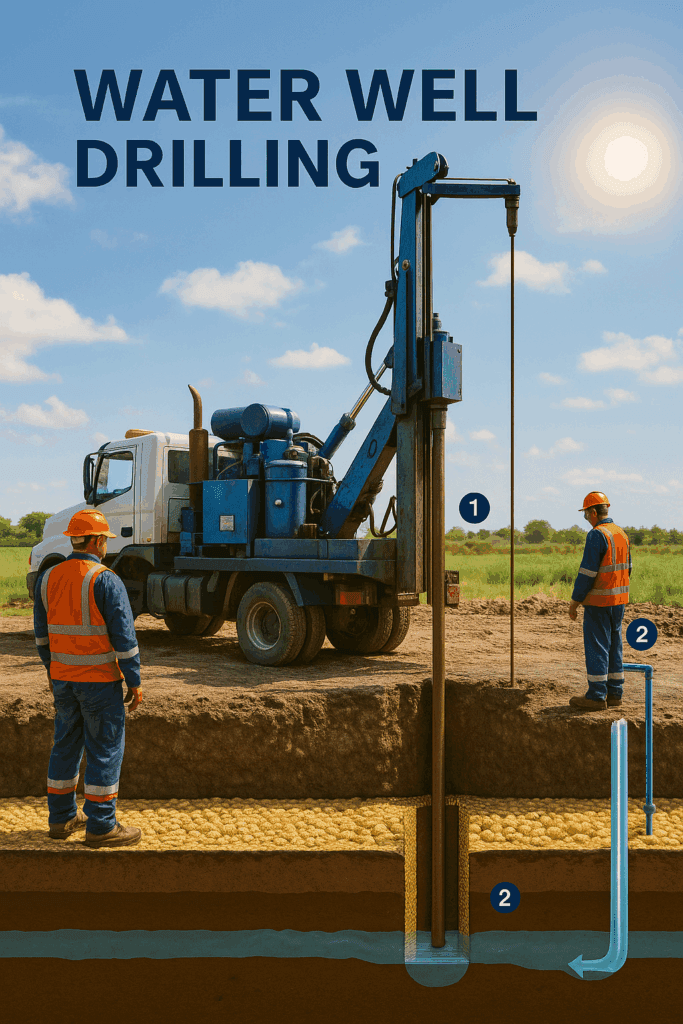
When a project depends on a dependable groundwater source, the water well must be engineered and executed with tight QA/QC. Below is a clear, end-to-end sequence we use on live jobs—covering mobilisation, drilling, casing and screening, gravel packing, wellhead build-up, flushing and pump testing, and final commissioning. This mirrors the practical field method in our […]

Raft Foundation & Pouring Process (The AmtaarGC Way)

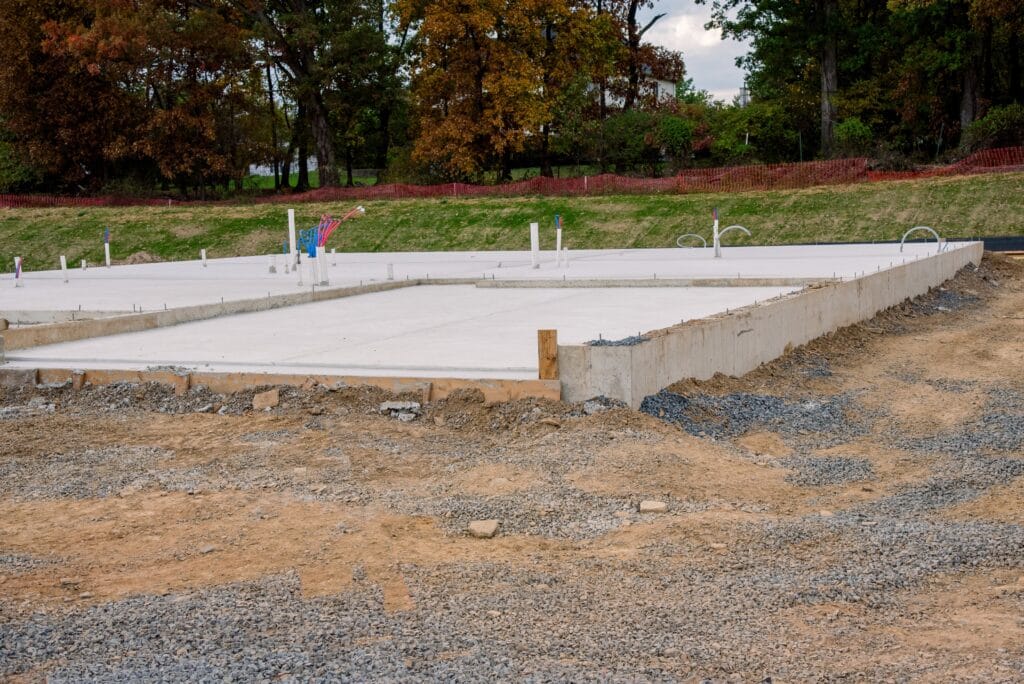
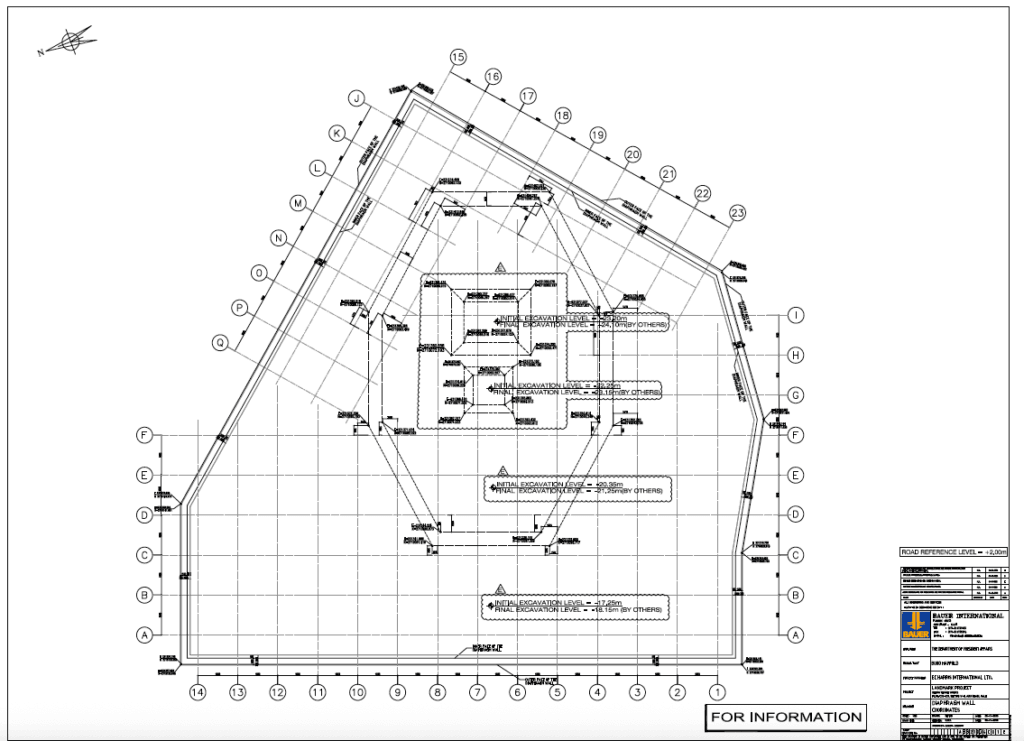
Raft (mat) foundations are our default solution for London’s mixed ground—spanning across the whole building footprint to spread loads evenly, control settlement, and simplify coordination of vertical elements (cores, shear walls, columns). Below is how we deliver rafts quickly, safely, and to spec—so your frame can rise without surprises. When we choose a raft Our […]

French Drain vs ACO Drain — What’s the Difference (and When to Use Each)?

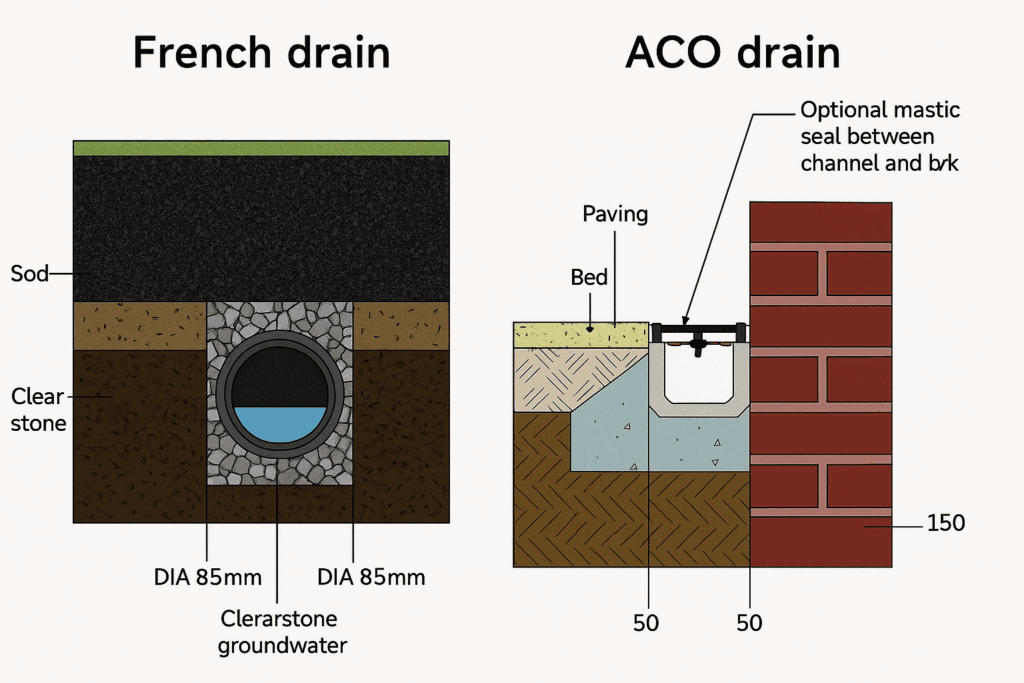
When clients ask, “French drain or ACO drain—aren’t they the same thing?”, the simple answer is: they solve the same problem (moving rainwater away safely), but they do it in different ways and are used in different places. In many projects we actually use both together. The quick verdict Can I use both? Yes—and that’s […]

Speak to Our Lead Engineer Now